












Digging into Culebra's Twisted History
The Culebra is an enigma, several myths and stories circulate about its history and usefulness. But I warn you, the most credible explanation might disappoint you.
The first real evidence of Culebras production was found in a New Auckland newspaper in 1890, attributing Culebras to the Compañia General de Tabacos Filipinas (1881).
They then found their way into American cigar factories, mainly in Ohio and Wisconsin.
So… nothing Cuban about these oddly shaped cigars. Culebras were adopted, but not invented, by Partagas, H.Upmann nor Romeo Y Julieta.
The first theory is that weaving thin cigars together helps the tobacco mature more quickly.
So it could be a clever way to speed up production.
Another theory is the use of Culebras as a mean to monitor the cigar roller in the factory. It was said that in one day, each worker was given 3 cigars to smoke.
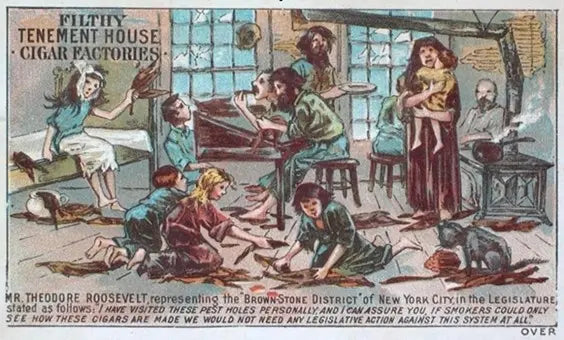
By providing oddly shaped cigars, the factories ensured that the workers would not sell the cigars themselves.
A theory that seems logical at first glance, but why would the factory produce more cigars, rather than letting workers smoke the rejects?
That’s why we never found any pictures of workers smoking Culebras..!

Burgess Meredith in a 1963 episode of “The Twilight Zone.”
Just a curiosity?
Finally, it’s American cigar historian Tony Hyman who outlines the global consensus in 2014 and states “It's a novelty, like Crooks, Flats, Bends, Immense, Bang-Tails, Pegged [all historical names of cigar brands].”
The testimony of Partagas culebra Master Roller Vicente Perez of Don Vicente Cigars International, who remembers learning how to make Culebras from his father, supports this version.
He said it was not something that he remembers being rolled regularly and, therefore, fell into the novelty category.
This small, braided mini Herf ready to happen fascinates every time it’s there. Now you got the story that comes with it!